Percutaneous mitral balloon valvotomy: long-term outcome and assessment of risk factors for death and major events
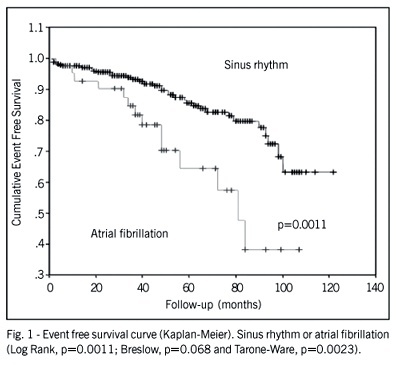
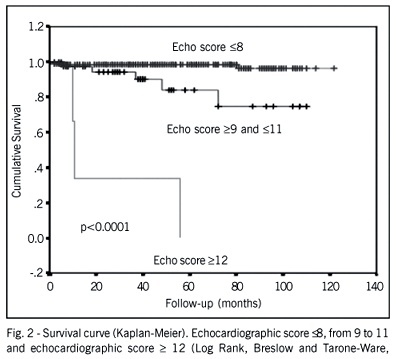
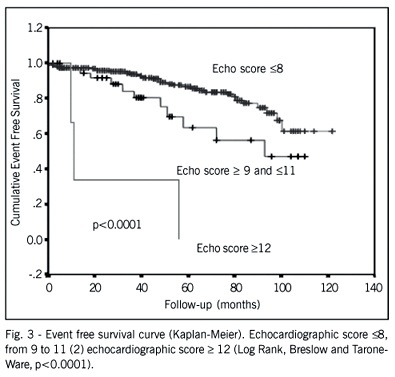
OBJECTIVE: To identify the factors that predict death and combined events, (death, new mitral balloon valvotomy, or mitral valve surgery) in long-term follow-up of patients undergoing percutaneous mitral balloon valvotomy. METHODS: Follow-up was 49.0±31.0 (1 to 122) months. Techniques used were the single-balloon (84.4%), Inoue-balloon (13.8%), and double-balloon techniques (1.7%). RESULTS: Included in the study were 289 patients 38.0±12.6 years of age (range, 13 to 83). Before the procedure, 244 patients had echocardiographic score 8. Females comprised 85%, and 84% patients were in sinus rhythm. During follow-up, survival of the total group was 95.5%, that of the group with 8 was 82.2% (P<0.0001), whereas combined event-free survival was 83.4%, 86.1%, and 68.9%, respectively (P 8 and the presence of severe valvular mitral regurgitation during the procedure. The events that predicted combined events were a previous history of mitral valvular commissurotomy and atrial fibrillation and the presence of severe mitral valvular regurgitation during the procedure, and postprocedure mitral valvular area < 1.5 m² (failure). CONCLUSION: Percutaneous mitral balloon valvotomy is an effective procedure, and over 2/3 of the patients were event-free at the end of follow-up. Survival in the group was high, even higher in the group with lower echocardiographic scores.
Images
Image gallery fullscreen viewer
Comments are moderated by the editorial team before publication. Discussions should be evidence-based and use scientific language. Conflicts of interest should be declared.